Español
  Polski
  Greek
Greek  Italiano
  Turkish
  简体中文
简体中文  English

A Small Laundry Pod Factory Is Not Just About Buying a Machine
When people first consider starting a laundry pod business, the first question is often: How much does a laundry pod machine cost?
But this is usually not the most important question.
A laundry pod factory is a complete manufacturing system. Equipment is only one part of it. Before investing in machinery, the first task is to understand the local market, define the right product, confirm that it can be manufactured at a competitive cost, and then decide how much production capacity is actually needed.
For a new entrant, following this sequence can significantly reduce investment risk.
1. Start With the Market
Before designing the factory, study the market first. Several early signals can quickly indicate whether a laundry pod project is worth further investigation.
One useful signal is whether major detergent companies are already selling laundry pods locally and actively investing in advertising or consumer education. If large companies are putting resources into developing the category, it normally means that some level of consumer awareness and market infrastructure already exists.
The next step is to collect competing products from international brands, local manufacturers, private-label suppliers, imported products, e-commerce platforms and cross-border sellers. These products can then be organized into a simple competitor database.
Useful information to compare includes brand, manufacturer, country of origin, pod weight, chamber structure, formula claims, packaging format, retail price, cost per wash, consumer reviews, common complaints and overall product positioning.
This kind of research costs very little compared with building a factory, but it can prevent much larger investment mistakes later.
2. Define the Product Before Defining the Factory
Once the market is reasonably understood, the next step is to establish an initial product direction.
Key questions include the target pod weight, single- or multi-chamber design, target retail price, expected cleaning performance, key selling points, packaging format and target consumer group.
However, the product should not be fixed too early. Market ideas still need to be tested against manufacturing reality.
The proposed product needs to be checked for formulation feasibility, PVA film compatibility, filling accuracy, sealing performance, mold design, packaging cost, raw-material availability and total production cost.
In practice, a commercially viable product is rarely created by the marketing team or the production team alone. It normally comes from continuous coordination between market demand and manufacturing feasibility.
3. Why Differentiation Matters
Laundry pods have been commercially available for more than a decade, which means that a generic product is becoming increasingly difficult to compete with.
Large manufacturers already operate highly efficient production systems and can achieve relatively low unit costs. At the same time, imported products, private-label products and online sellers continue to reduce the price premium that consumers are willing to pay.
For a smaller manufacturer, competing only on price is therefore usually difficult.
Differentiation may come from better cleaning performance, powder-liquid combinations, multi-chamber structures, improved low-temperature washing, specific stain-removal performance, distinctive fragrance systems, products adapted to local consumer habits, special packaging or professional and niche applications.
The important point is simple: the product needs a clear reason to exist beyond being another laundry pod.
4. Large Factory or Phased Investment?
There are generally two investment routes for a laundry pod manufacturing project.
Full-Scale Industrial Route
A highly automated laundry pod factory may include high-speed pod machines, automatic formulation and dosing systems, automatic packaging lines, warehousing, laboratories, utility systems, factory infrastructure and significant raw-material inventory.
Depending on the level of automation, capacity and project scope, total investment may reach approximately USD 4–5 million or more.
This route is normally more suitable for companies that already have an established detergent business, strong distribution channels, sufficient capital, experienced technical and management teams, and reasonably predictable market demand.
Small Phased Route
For a new project, a phased investment strategy is often more flexible.
A very small initial production unit may begin with approximately USD 50,000–100,000 for basic manufacturing equipment and production infrastructure.
This figure should not be interpreted as the total cost of establishing a legally compliant factory in every country. Factory rent, fire protection, environmental compliance, certification, labor, utilities, raw-material inventory and working capital vary significantly from one market to another.
The purpose of the initial investment is to create what can be called a Minimum Viable Manufacturing Unit.
First, prove that the product can be manufactured consistently. Then prove that customers are willing to buy it. Once both manufacturing and market assumptions have been validated, capacity can be expanded step by step.
This approach reduces the risk of building a large factory around a product or market that has not yet been proven.
5. What Does a Small Laundry Pod Factory Need?
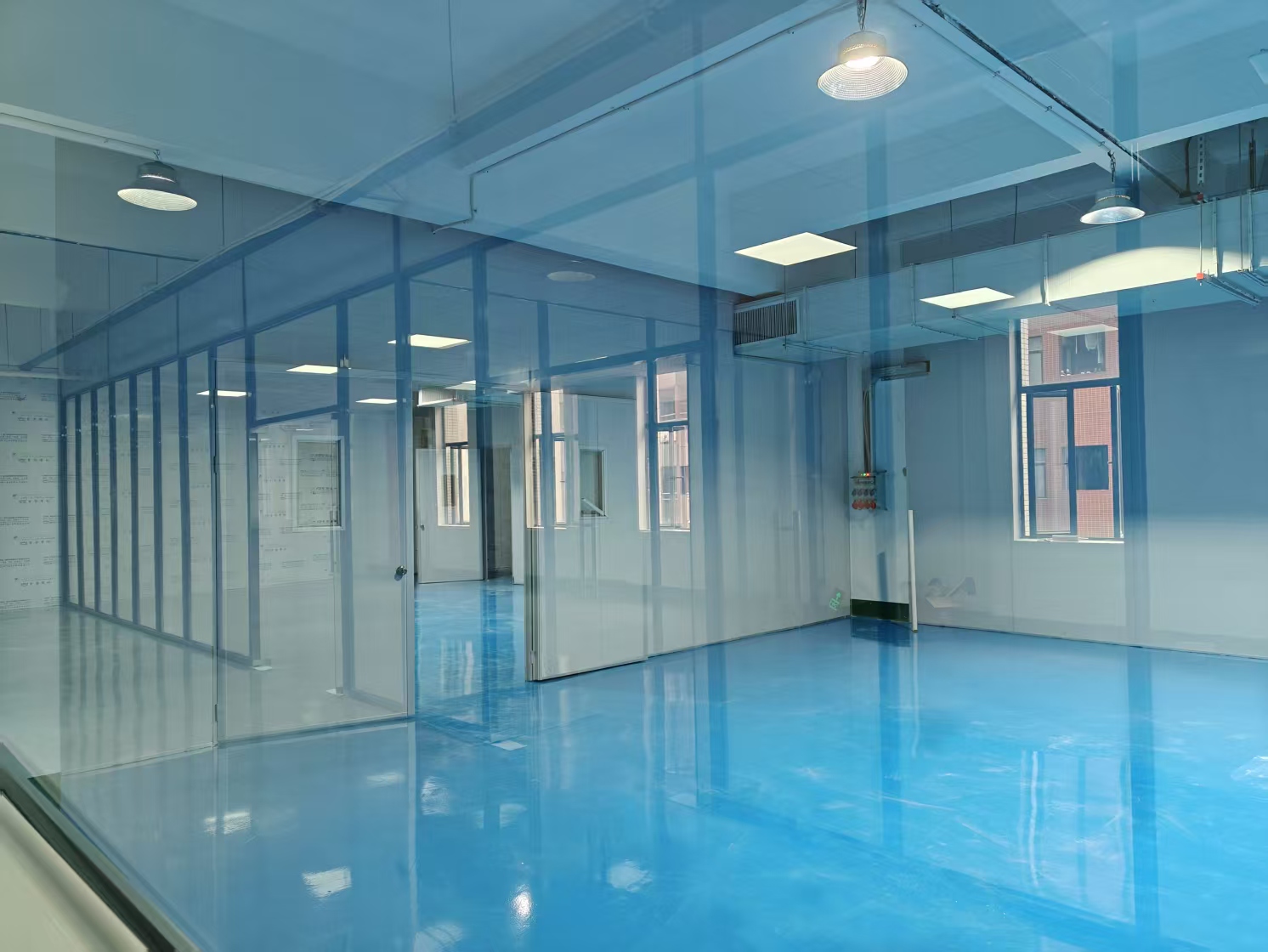
A compact laundry pod factory can be divided into several functional modules: a raw-material warehouse, mixing area, pod forming and filling area, temporary product buffer, packaging area, packaging-material warehouse, finished-goods warehouse, R&D and quality-control laboratory, and a production and business management area.
Depending on equipment size, local regulations, inventory requirements and the number of SKUs, a basic production unit can potentially be organized within approximately 500㎡.
Laundry pods are concentrated products, so their manufacturing and storage footprint can be significantly smaller than that of conventional liquid detergent products with an equivalent number of consumer washes.
The important issue is not simply fitting equipment into the building. The factory should also support efficient material flow from raw materials to mixing, forming, temporary storage, packaging and finished-goods warehousing while avoiding unnecessary cross-flow between materials, people and finished products.
6. Main Equipment Required
The main equipment in a small laundry pod factory can generally be divided into four groups.
Mixing System
The mixing system normally includes mixing tanks, pumps, weighing equipment, filtration, IBC containers and material-transfer systems. Its purpose is to prepare stable formulations and deliver them consistently to the pod production line.
Pod Forming Machine
The pod forming machine performs the core manufacturing process, including PVA film forming, filling, sealing, cutting and product discharge.
The required machine configuration depends heavily on the product. A simple single-liquid pod and a multi-chamber powder-liquid product may require very different filling systems, molds and process controls.
Packaging Equipment
Packaging equipment varies according to the final commercial format and may include counting, weighing, bagging, boxing, sealing, coding and cartoning systems.
For a small factory, some packaging operations can initially remain semi-automatic and later be upgraded as production volume increases.
General Factory Equipment
Supporting equipment may include air compressors, forklifts, conveyors, pallets, production baskets, work tables, cleaning equipment and material-handling systems.
These items are less visible than the pod machine itself, but they are essential for stable daily production.
7. Do Not Ignore the Laboratory and Quality-Control System
Even a small laundry pod factory needs basic R&D and quality-control capabilities.
The laboratory is responsible not only for formulation development but also for incoming-material inspection, PVA compatibility testing, product stability evaluation, production troubleshooting, retained samples, process control and new-product development.
Laundry pods combine concentrated chemistry, water-soluble film, forming, filling and sealing processes. A formulation that performs well as a detergent may still create problems with PVA film stability or manufacturing.
For this reason, product formulation and manufacturing process development should be treated as one integrated system rather than two separate activities.
8. A Practical Project Sequence
A safer small-factory development path can be summarized as:
Market Research → Competitor Benchmarking → Initial Product Positioning → Formula + PVA + Equipment Feasibility → Manufacturing Cost Analysis → Pilot Product → Small Factory Design → Equipment Installation → Supply Chain Setup → Trial Production → Market Validation → Capacity Expansion
This sequence is fundamentally different from buying a machine first and then trying to decide what product to manufacture.
The equipment should serve the product strategy. The product strategy should serve the market.
Conclusion
The most important investment in a small laundry pod factory is not the pod machine itself. It is the ability to continuously connect:
Market → Product → Formulation → Manufacturing → Sales → Feedback
A small factory can be a highly effective starting point when it is built around a clear market position, a realistic product strategy and a manufacturing platform that can expand over time.
For new entrants, starting small, validating the product and improving the manufacturing system step by step can often provide much greater flexibility than building a large automated plant from day one.
The goal of the first factory is not necessarily to achieve maximum capacity. It is to build a manufacturing system that can produce the right product consistently, learn from the market and create a foundation for future growth.